Your Overview to PFAS Treatment Technologies and Advantages
The prevalence of PFAS contamination in water sources requires a detailed understanding of readily available treatment technologies. Each technology not only targets specific PFAS substances yet additionally plays an essential function in enhancing general water high quality and protecting environmental honesty.
Comprehending PFAS Contamination
Understanding PFAS contamination is crucial for addressing its prevalent effect on environmental and human wellness (m270 pfas treatment). Per- and polyfluoroalkyl substances (PFAS) are a group of artificial chemicals commonly utilized in various industrial and customer products because of their water- and grease-resistant residential properties. Generally found in firefighting foams, non-stick pots and pans, and water-repellent materials, PFAS have entered the environment through manufacturing processes, wastewater discharges, and seeping from garbage dumps
When launched, these substances continue the environment, bring about widespread contamination of soil and water sources. Their one-of-a-kind chemical structure, defined by strong carbon-fluorine bonds, provides them immune to degradation, resulting in a phenomenon called "permanently chemicals." PFAS can collect in the human body and the food chain, potentially causing unfavorable health and wellness results, including immune system disruption, developmental issues, and a raised threat of particular cancers.
Regulative companies and health companies are increasingly acknowledging the value of PFAS contamination, prompting initiatives to keep track of, assess, and mitigate its impacts. Comprehending the pathways of PFAS contamination is necessary for notifying public law and establishing efficient techniques to safeguard both ecological and human health and wellness.
Review of Treatment Technologies
Numerous treatment technologies have been established to resolve the obstacles posed by PFAS contamination in water and dirt. These modern technologies can be broadly identified right into a number of groups, each with its one-of-a-kind systems and effectiveness in eliminating PFAS compounds.
One prominent technique is ion exchange, which uses resin products to catch and remove PFAS from infected water. This approach is specifically effective for short-chain PFAS and can attain considerable decreases in focus degrees. An additional technology, progressed oxidation processes (AOPs), utilizes strong oxidants and ultraviolet light to damage down PFAS right into much less unsafe compounds. AOPs appropriate for treating a large range of PFAS compounds however might need mindful optimization to make the most of efficacy.
Triggered Carbon Filtering
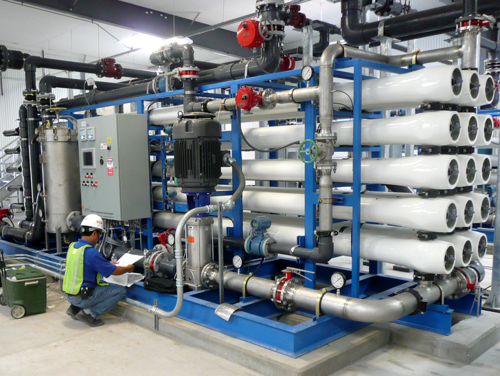
Turned on carbon purification is an extensively made use of approach for the removal of PFAS from polluted water, understood for its capability to adsorb a wide series of natural substances. This innovation uses turned on carbon, a highly porous material with an extensive area, which facilitates the binding of PFAS particles via physical adsorption. The performance of turned on carbon in getting rid of PFAS is influenced by several factors, consisting of the kind of carbon made use of, the get in touch with time, and the concentration of PFAS in the water.
One of the benefits of activated carbon purification is its convenience; it can be applied in numerous setups, such as granular triggered carbon (GAC) systems or powdered turned on carbon (PAC) systems. GAC systems are typically used in larger-scale applications, while special-interest group can be utilized in smaller or temporary arrangements. The modern technology is fairly easy to run and maintain, making it obtainable for lots of water treatment centers.

Ion Exchange Solution
Ion exchange systems represent one more effective technique for the removal of PFAS from infected water, matching approaches like triggered carbon purification. These systems run on the principle of trading ions in the water with ions held on a resin product. Ion exchange resins can be especially developed to target the adversely charged PFAS compounds, effectively catching them and permitting cleaner water visit the site to go through.
Among the primary advantages of ion exchange systems is their capacity to get rid of a broad array of PFAS, including both long-chain and short-chain variations. This versatility makes them appropriate for numerous applications, ranging from metropolitan water treatment to commercial processes. Furthermore, ion exchange systems can frequently attain reduced detection limits for PFAS contrasted to a few other therapy approaches, thus improving water quality.
Nonetheless, it is important to keep an eye on and take care of the regeneration of ion exchange media, as the performance can decline with time as a result of saturation. Proper maintenance and substitute of the material are critical for sustaining the system's efficiency. Generally, ion exchange systems provide a dependable and effective option for PFAS elimination, adding dramatically to safe drinking water standards and environmental defense.
Advanced Oxidation Processes
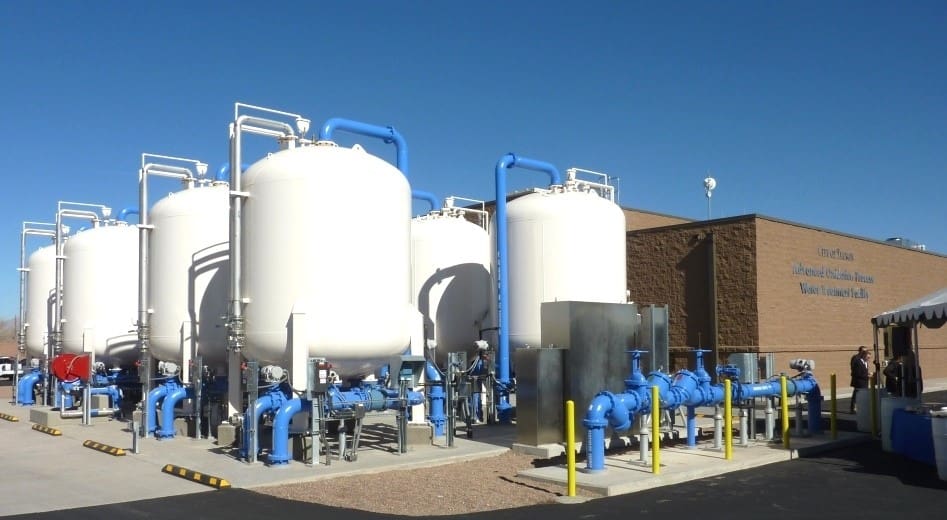
Advanced Oxidation Processes (AOPs) make use of powerful oxidants to effectively deteriorate PFAS compounds in infected water. These innovative he has a good point therapy methods generate highly responsive varieties, such as hydroxyl radicals, that can damage down complicated PFAS particles into less damaging by-products. m270 pfas treatment. AOPs usually utilize combinations of ultraviolet (UV) light, ozone, hydrogen peroxide, or Fenton's reagent, boosting the oxidation potential and boosting destruction performance
The key benefit of AOPs lies in their ability to target a wide series of PFAS substances, consisting of both long-chain and short-chain variations. This flexibility is important, as PFAS contamination frequently involves mixes of different compounds with differing chemical structures. AOPs can be incorporated into existing water therapy systems, making them a sensible option for lots of communities and industries.
However, the execution of AOPs can be resource-intensive, needing mindful factor to consider of functional prices and energy intake. Furthermore, while AOPs are effective in damaging down PFAS, they may not entirely remove all results, necessitating more treatment actions - m270 pfas treatment. Generally, AOPs represent an encouraging opportunity for attending to PFAS contamination, adding to cleaner water sources and enhanced public wellness protection
Verdict
By choosing the proper technology, areas can enhance water top quality, safeguard public health, and alleviate the environmental dangers associated with PFAS exposure. Proceeded research and application of these methods are essential for efficient management of PFAS contamination in impacted locations.